Amazon Holiday Deals

Showing posts with label United States. Show all posts

Friday, March 6, 2015

Success Is Not Just About Smarts

English: Logo of One Laptop per Child
English: Logo of One Laptop per Child (Photo credit: Wikipedia)
I like this article. Not that it disregards technology, but it enforces the truth, that with or without technology, our basis for success is not only intelligence. I mean, being smart gives you a headstart, but grit - fortitude and determination, coupled with persistence, and all of the other good values - these what makes the basis for making it good in life. But then again, it is not a guarantee...
-----


TOM BRADY


Technology has been promoted as the great equalizer in education. Initiatives like One Laptop Per Child and Massive Online Open Courses were supposed to democratize learning, but when the $400 laptops given to poor children around the world broke, and failure rates of some MOOCs were as high as 75 percent, reality set in.

Though many believe that computers can shrink the education gap, research shows that giving students from poor families online access is more likely to widen the divide, Susan Pinker reported in The Times. Jacob Vigdor and Helen Ladd, economists at Duke University in North Carolina, tracked a million disadvantaged middle-school students for five years after they were given networked computers and found “a persistent decline in reading and math scores,” they wrote. The scores of boys and African-Americans dropped drastically because many used their machines to play games, surf social media and download entertainment.

The same thing happened in the One Laptop project, with children spending less time on their homework than before, researchers found.

New findings suggest that educators should focus more on low teacher-student ratios, early intervention and character traits.

Chicago has introduced an intensive program where black and Latino boys work two on one with a tutor, and participants have ended up as much as two years ahead of students who haven’t gotten help, David Kirp wrote in The Times. This math success also has put them on track to graduate, helped them engage in school and made them less likely to be arrested for a violent crime.

Many programs address the time between birth and age 3, but the teen years may be just as important. Laurence Steinberg, a psychologist at Temple University in Philadelphia, points out in his new book that neuroscientists have realized that adolescence, like early childhood, Is a “period of tremendous ‘neuroplasticity,’ ” during which the brain changes through experience.

The Time’s Nicholas Kristof wrote that early help for disadvantaged children not only reduces inequality but also can save public money. He quoted James Heckman, a University of Chicago professor and Nobel Prize-winning economists, who says the cheapest way to reduce crime is to invest in early childhood programs. Mr. Heckman has calculated that to get the same reduction in crime by adding police officers would cost five times as much.

“Early education” includes counseling at-risk pregnant women not to drink, smoke or take drugs, and then after birth, helping them breast-feed and read to the child. These help, Mr.Kristof wrote, “apparently because the first few years are the window when the brain is forming and when basic skills like self-control and grit are developed.”

At some schools, grit, self- control and curiosity are now part of the curriculum. Scientists say personality could be more important than intelligence when it comes to success in school.

Arthur E. Poropat, an Australian psychology professor, cites data showing that a tendency to be “diligent, dutiful and hardworking,” and qualities like creativity and curiosity, are more predictive of student performance than intelligence. This is good news, Dr. Poropat wrote in a paper last year, because “personality has been demonstrated to change over time to a far greater extent than intelligence.”

“We probably need to start rethinking our emphasis on intelligence,” he told The Times.

Mandy Benedix, who teaches a class on grit at Rogers Middle School in Pearland, Texas, told The Times: “We know that these non-cognitive traits can be taught. We also know that it is necessary for success. You look at anybody who has had long-term sustainable success, and every one of them exhibited at some point this grit, this tenacity to keep going.”


Taken from TODAY Saturday Edition, The New York Times International Weekly, February 28, 2015

Tuesday, July 22, 2014

The Dragonfly as Nature's Drone, Both Pretty and Deadly

Fiery Skimmer Dragonfly ?
Fiery Skimmer Dragonfly ? (Photo credit: aussiegall)
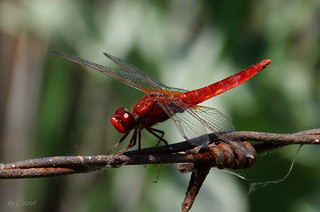
Dragonfly. Libelulă
Dragonfly. Libelulă (Photo credit: Cost3l)
A Dragonfly.
A Dragonfly. (Photo credit: Wikipedia)
English: Emperor Dragonfly (Anax imperator). F...
English: Emperor Dragonfly (Anax imperator). Français : Un Anax empereur en vol. (Photo credit: Wikipedia)
English: Dragonfly
English: Dragonfly (Photo credit: Wikipedia)
Dragonfly
Dragonfly (Photo credit: Wikipedia)
22-July-2014
-----


by Natalie Angier


African lions roar and strut, but they're lucky to catch 25 percent of the prey they pursue. Great white sharks have 300 slashing teeth, and still nearly half their hunts fail.

Dragonflies, by contrast, look dainty, and they're often grouped with butterflies and ladybugs on the short life of Insects People Like. Yet they are also voracious aerial predators, and new research suggests they may well be the most brutally effective hunters in the animal kingdom.

When setting off to geed on other flying insects, dragonflies manage to snatch their targets in midair more that 95 percent of the time, often wolfishly consuming the fresh meat without bothering to alight.

"They'll tear up the prey and mash in into a glob, munch, munch, munch," said Michael L. May, an emeritus professor of entomology at Rutgers University in New Jersey.

"It almost looks like a wad of snuff in the mouth before they swallow it," he said.

Next step: grab more food. Stacey Combes, who studies dragonfly flight at Harvard University, once watched a laboratory dragonfly eat 30 flies in a row. "It would have happily kept eating," she said, "if there had been more food available."

In recent papers, scientists have pinpointed key features of the dragonfly's brain, eyes and wings that allow it to hunt so unerringly. One research team has determined that the nervous system of a dragonfly displays an almost human capacity for selective attention, able to focus on a single prey as it flies amid a cloud of similarly fluttering insects, just as a guest at a party can attend to a friend's words while ignoring the background chatter.

Other researchers have identified a kind of master circuit of 16 neurons that connect the dragonfly's brain to its flight motor center in the thorax. With the aid of that neural package, a dragonfly can track a moving target, calculate a trajectory to intercept that target and subtly adjust its path as needed.

The scientists found evidence that a dragonfly plots its course to intercept through a variant of "an old mariner's trick," said Robert M. Olberg of Union College in Schenectady, New York, who reported the research with his colleagues in Proceedings of the National Academy of Sciences. If you're heading north on a boat and you see another boat moving, say, 30 degrees to your right, and if as the two of you barrel forward the other boat remains at that 30-degree spot in our field of view, vector mechanics dictate that your boats will crash: better slow down, speed up or turn aside.

In a similar manner, as a dragonfly closes in on a meal, it maintains an image of the moving prey on the same spot. "The image of the prey is getting bigger, but if it's always on the same spot of the retina, the dragonfly will intercept its target," said Paloma T. Gonzalez-Bellido, an author of the new report who now works at the Marine Biological Laboratory in Woods Hole, Massachusetts.

As a rule, the hunted remains clueless until it's all over. "Before I got into this work, I'd assumed it was an active chase, like a lion going after an impala," Dr. Combes said. "But it's more like ambush predation. The dragonfly comes from behind and below, and the prey doesn't know what's coming."

Dragonflies are able to hover, dive, fly backward and upside down, pivot 360 degrees with three tiny wing beats, and reach speeds of nearly 50 kilometers per hour. In many insects, the wings are simple extensions of the thoracic box and are moved largely as a unit, by flexing the entire thorax. In the dragonfly, the four transparent, ultraflexible wings are attached to the thorax by separate muscles and can each be maneuvered independently, lending the insect an extraordinary range of flight options.

Their eyes are the largest and possibly the keenest in the insect world, a pair of giant spheres each built of some 30,000 pixel-like facets that together take up pretty much the entire head.

Dragonflies can't really hear, and with their stubby antennas they're not much for smelling or pheromonal flirtations.

Perhaps not surprisingly, much dragonfly research is supported by the United States military, which sees the insect as the archetypal precision drone.

Some dragonfly species migrate long distances. Recent studies have shown that green darner dragonflies migrate in sizable swarms each fall and spring between the northern United States and southern Mexico, while the globe skimmer dragonfly lives up to its name: it has been tracked crossing between India and Africa, a round-trip, multigenerational pilgrimage that may exceed 16,000 kilometers.

Dragonflies migrate to maximize breeding opportunities, to find warm freshwater ponds in which they can safely lay their eggs. From those eggs hatch dragonfly larvae: astonishing gilled predators that will spend weeks to years hydro-jetting through water and shooting their mouthparts after aquatic prey, until they're ready to spread their wings and take the hunt to the sky.


-----
Taken from TODAY Saturday Edition, April 13, 2013

Monday, February 18, 2013

A soft drink a day raises prostate cancer risk: study

I wanted to post this article in the Healthy Me - At Home and Away, but I think it will serve a better purpose if kids knew about this...
-----

Posted: 27 November 2012

A woman sells soft drinks at a stall in Beijing on April 22. Men who drink one normal-sized soft drink per day are at greater risk of getting more aggressive forms of prostate cancer, according to a Swedish study released Monday. (AFP/File - Ed Jones)
STOCKHOLM: Men who drink one normal-sized soft drink per day are at greater risk of getting more aggressive forms of prostate cancer, according to a Swedish study released Monday.

"Among the men who drank a lot of soft drinks or other drinks with added sugar, we saw an increased risk of prostate cancer of around 40 percent," said Isabel Drake, a PhD student at Lund University.

The study, to be published in the upcoming edition of the American Journal of Clinical Nutrition, followed over 8,000 men aged 45 to 73 for an average of 15 years.

Those who drank one 330-millilitre (11-fluid-ounce) soft drink a day were 40 percent more likely to develop more serious forms of prostate cancer that required treatment.

The cancer was discovered after the men showed symptoms of the disease, and not through the screening process known as Prostate-Specific Antigen (PSA).

Those who ate a diet heavy on rice and pasta increased their risk of getting milder forms of prostate cancer, which often required no treatment, by 31 percent, while a high intake of sugary breakfast cereals raised the incidence of milder forms of the cancer to 38 percent, Drake told AFP.

While further research was needed before dietary guidelines could be changed, there are already plenty of reasons a person should cut back on soft-drink consumption, she noted.

The men in the study had to undergo regular medical examinations and kept a journal of their food and drink intake.

Previous studies have shown that Chinese and Japanese immigrants in the US develop prostate cancer more often than peers in their home countries.

Further research on how genes respond to different diets would make it possible to "tailor food and drink guidelines for certain high-risk groups," Drake said.

- AFP/fa


-----
Taken from ChannelNewsAsia.com; source article is below:
A soft drink a day raises prostate cancer risk: study

Enhanced by Zemanta

Saturday, January 5, 2013

Organic food not necessarily better for children, say experts

Posted: 23 October 2012


Organic fruits and vegetables
WASHINGTON: Feed your children plenty of fruits and vegetables but don't fret over whether they're organic or not if you're on a budget, US experts said on Monday.

While organic foods have lower pesticide levels, they also have the same vitamins, minerals, antioxidants and other nutrients as their conventional counterparts.

"We do not want families to choose to consume smaller amounts of more expensive organic foods and thus reduce their overall intake of healthy foods like produce," said Janet Silverstein of the American Academy of Pediatrics

"What's most important is that children eat a healthy diet rich in fruits, vegetables, whole grains, and low-fat or fat-free dairy products, whether those are conventional or organic foods," she said.

"This type of diet has proven health benefits," she said.

The report found no individual health benefit from organic milk but emphasised that all milk should be pasteurised to reduce the risk of bacterial infections.

In that vein, the group called for large prospective cohort studies that directly measure environmental exposures such as estrogen at low levels to examine the impact of hormonal exposure of children through milk and meat.

A large-scale study by researchers from Stanford University published in early September found that organic foods were no more nutritious than conventional products but contained fewer traces of pesticides.

- AFP/de


-----
Taken from ChannelNewsAsia.com; source article is below:
Organic food not necessarily better for children, say experts


Enhanced by Zemanta