Amazon Holiday Deals

Tuesday, November 4, 2014

Mystery Solved

Pablo Picasso 1962
Pablo Picasso 1962 (Photo credit: Wikipedia)
I must say that this article is a year late, and even more than a year actually. But the insight to the creativity - or rather - method, of the artist, is known only just now, after decades. His style? Maybe. And maybe just one of his many styles. Whatever, let this be a new discovery - for the good.
-----

Prints offer insight into Picasso’s creative process


SINGAPORE – We tend to think of Pablo Picasso as a painter. The Singapore Tyler Print Institute’s latest show hopes to expand that.

Coming from archives of his son, Claude, the works have never been exhibited in Asia before and each series of prints offers some insight into Picasso’s creative process. In The Bull, he successively re-worked an image of a bull, starting from a fairly naturalistic treatment and gradually reducing it to a collection of sinuous lines. Two Nude Women, on the other hand, also begins naturalistically, but presents a more additive take on the process of abstraction. If anything, for those less familiar with abstract art, it’s an eye-opening look at how artists can abstract their subject.

The photographs of David Douglas Duncan, a close friend of Picasso’s, continue the overall theme of finding different perspectives of the artist and offer us a candid look at the man behind the art.

It’s not unusual for an aura of mystery to build up around a figure as significant as him. But in a welcome breath of fresh air, this show offers us a rare look behind the scenes, at intriguing, intimate, and engaging perspective on the life and work of Pablo Picasso.

BRUCE QUEK


Taken from TODAY Saturday Edition, June 29, 2013

Friday, October 31, 2014

Dinosaur Eating Habits

Size comparison between the carnosaurian thero...
Size comparison between the carnosaurian theropod dinosaur Allosaurus and a human (Photo credit: Wikipedia)
Model of allosaurus in Bałtow, Poland
Model of allosaurus in Bałtow, Poland (Photo credit: Wikipedia)
English: Allosaurus
English: Allosaurus (Photo credit: Wikipedia)
by SINDYA N. BHANOO


Allosaurus, a smaller cousin of Tyrannosaurus rex, was a dexterous hunter that tugged at prey like a modern-day falcon, showing far more refined table manners than T. rex, researchers are reporting.

“While T. rex was like an angry gorilla with an ice pick, Allosaurus was like a surgeon with a scalpel,” said Eric Snively, a mechanical engineer at Ohio University and an author of a new study on the smaller dinosaur, published in the journal Palaeontologia Electronica, based on 150-million-year-old bones. Using a CT scanner and a method called multibody dynamics, developed originally for robotics, the researchers modeled Allosaurus’s neck and jaw muscles and simulated its muscle movement.

“The skull is loaded with scars where muscles attach, and we were able to reconstruct the dinosaur by making comparison to modern day birds,” said another author, Lawrence M.Witmer, a paleontologist at Ohio.

Though more than six meters long and twice as heavy as a polar bear, Allosaurus probably drove its teeth downward into its prey. Like such small falcons as the American kestrel, it held its head steady and then pulled flesh up; T.rex, by contrast, used more of a side-to-side thrashing action.


Taken from TODAY Saturday Edition, June 15, 2013

Keeping Babies Warm

Jaap Vermeulen, Jacoplane in a Neonatal intens...
Jaap Vermeulen, Jacoplane in a Neonatal intensive care unit (Photo credit: Wikipedia)
English: A new mother holds her baby who was b...
English: A new mother holds her baby who was born 10 weeks premature at Kapiolani Medical Center in Honolulu, Hawaii (Photo credit: Wikipedia)
by DONALD G. McNEIL JR.


In the United States, some very premature babies are swaddled in sterile plastic wrap to keep to their body temperature from dropping dangerously. Now a study of newborns in Zambia suggests that the technique can be duplicated cheaply and effectively in poorer countries – using simple plastic bags.

“These are regular plastic bags, similar to grocery bags,” said an author of the study, Dr. Waldemar A. Carlo, a neonatal care specialist at the University of Alabama at Birmingham.

The skin of premature babies is very thin, and water evaporates quickly through it, sometimes leading to life-threatening heat loss, especially in a poor country where heat in neonatal wards can be unsteady.

In a hospital in Lusaka, Zambia, babies were placed on their mothers’ chests right after birth in typical “kangaroo care,” he said. But kangaroo care is not always enough to warm a child, and when babies were taken to be weighed or observed or because the mother fell asleep or needed medical treatment, putting them in a plastic bag before wrapping them in a blanket did a better job of keeping them warm than a blanket alone.


Taken from TODAY Saturday Edition, June 15, 2013

Tuesday, July 22, 2014

The Dragonfly as Nature's Drone, Both Pretty and Deadly

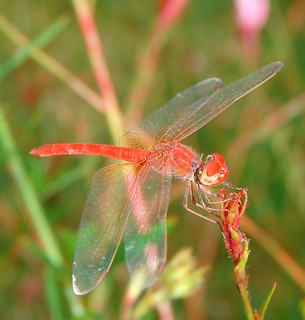
Fiery Skimmer Dragonfly ?
Fiery Skimmer Dragonfly ? (Photo credit: aussiegall)
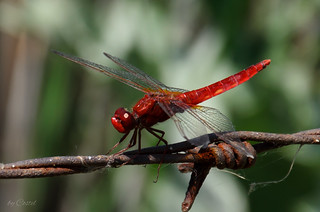
Dragonfly. Libelulă
Dragonfly. Libelulă (Photo credit: Cost3l)
A Dragonfly.
A Dragonfly. (Photo credit: Wikipedia)
English: Emperor Dragonfly (Anax imperator). F...
English: Emperor Dragonfly (Anax imperator). Français : Un Anax empereur en vol. (Photo credit: Wikipedia)
English: Dragonfly
English: Dragonfly (Photo credit: Wikipedia)
Dragonfly
Dragonfly (Photo credit: Wikipedia)
22-July-2014
-----


by Natalie Angier


African lions roar and strut, but they're lucky to catch 25 percent of the prey they pursue. Great white sharks have 300 slashing teeth, and still nearly half their hunts fail.

Dragonflies, by contrast, look dainty, and they're often grouped with butterflies and ladybugs on the short life of Insects People Like. Yet they are also voracious aerial predators, and new research suggests they may well be the most brutally effective hunters in the animal kingdom.

When setting off to geed on other flying insects, dragonflies manage to snatch their targets in midair more that 95 percent of the time, often wolfishly consuming the fresh meat without bothering to alight.

"They'll tear up the prey and mash in into a glob, munch, munch, munch," said Michael L. May, an emeritus professor of entomology at Rutgers University in New Jersey.

"It almost looks like a wad of snuff in the mouth before they swallow it," he said.

Next step: grab more food. Stacey Combes, who studies dragonfly flight at Harvard University, once watched a laboratory dragonfly eat 30 flies in a row. "It would have happily kept eating," she said, "if there had been more food available."

In recent papers, scientists have pinpointed key features of the dragonfly's brain, eyes and wings that allow it to hunt so unerringly. One research team has determined that the nervous system of a dragonfly displays an almost human capacity for selective attention, able to focus on a single prey as it flies amid a cloud of similarly fluttering insects, just as a guest at a party can attend to a friend's words while ignoring the background chatter.

Other researchers have identified a kind of master circuit of 16 neurons that connect the dragonfly's brain to its flight motor center in the thorax. With the aid of that neural package, a dragonfly can track a moving target, calculate a trajectory to intercept that target and subtly adjust its path as needed.

The scientists found evidence that a dragonfly plots its course to intercept through a variant of "an old mariner's trick," said Robert M. Olberg of Union College in Schenectady, New York, who reported the research with his colleagues in Proceedings of the National Academy of Sciences. If you're heading north on a boat and you see another boat moving, say, 30 degrees to your right, and if as the two of you barrel forward the other boat remains at that 30-degree spot in our field of view, vector mechanics dictate that your boats will crash: better slow down, speed up or turn aside.

In a similar manner, as a dragonfly closes in on a meal, it maintains an image of the moving prey on the same spot. "The image of the prey is getting bigger, but if it's always on the same spot of the retina, the dragonfly will intercept its target," said Paloma T. Gonzalez-Bellido, an author of the new report who now works at the Marine Biological Laboratory in Woods Hole, Massachusetts.

As a rule, the hunted remains clueless until it's all over. "Before I got into this work, I'd assumed it was an active chase, like a lion going after an impala," Dr. Combes said. "But it's more like ambush predation. The dragonfly comes from behind and below, and the prey doesn't know what's coming."

Dragonflies are able to hover, dive, fly backward and upside down, pivot 360 degrees with three tiny wing beats, and reach speeds of nearly 50 kilometers per hour. In many insects, the wings are simple extensions of the thoracic box and are moved largely as a unit, by flexing the entire thorax. In the dragonfly, the four transparent, ultraflexible wings are attached to the thorax by separate muscles and can each be maneuvered independently, lending the insect an extraordinary range of flight options.

Their eyes are the largest and possibly the keenest in the insect world, a pair of giant spheres each built of some 30,000 pixel-like facets that together take up pretty much the entire head.

Dragonflies can't really hear, and with their stubby antennas they're not much for smelling or pheromonal flirtations.

Perhaps not surprisingly, much dragonfly research is supported by the United States military, which sees the insect as the archetypal precision drone.

Some dragonfly species migrate long distances. Recent studies have shown that green darner dragonflies migrate in sizable swarms each fall and spring between the northern United States and southern Mexico, while the globe skimmer dragonfly lives up to its name: it has been tracked crossing between India and Africa, a round-trip, multigenerational pilgrimage that may exceed 16,000 kilometers.

Dragonflies migrate to maximize breeding opportunities, to find warm freshwater ponds in which they can safely lay their eggs. From those eggs hatch dragonfly larvae: astonishing gilled predators that will spend weeks to years hydro-jetting through water and shooting their mouthparts after aquatic prey, until they're ready to spread their wings and take the hunt to the sky.


-----
Taken from TODAY Saturday Edition, April 13, 2013

Saturday, July 19, 2014

Ancient Strait Is Clue To Origin of Wolf

Falklandwolf (Dusicyon australis) (Original de...
Falklandwolf (Dusicyon australis) (Original description: Canis antarcticus) (Photo credit: Wikipedia)
20-July-2014
-----


by Sindya N. Bhanoo


The Falkland Islands wolf, long extinct, is the only land-based mammal native to the islands. European explorers in the 17th century were puzzled by the presence of this lone mammalian species, as was Charles Darwin.

Now, researchers writing in Nature Communications suggest that the wolf traveled across a thin, shallow strait from the mainland to the islands during the last glacial maximum.During this period, about 18,000 to 25,000 years ago, the strait would periodically freeze over.

"This wolf was likely tracking penguins, seals and sea birds that were hauling out onto the ice," said Dr. Alan Cooper, an evolutionary biologist at the University of Adelaide in Australia.

The scientists believe the wolf crossed the strait from what is now Argentina. "The question is, how did this great big mammal get over when rodents didn't?" he said.

Dr. Cooper and his colleagues compared DNA samples from the wolf with those of one of its closest mainland relatives, an extinct foxlike species called Dusicyon avus. They found that the two species separated about 16,000 years ago, coinciding with the last glacial maximum and the frozen marine strait.

Previously, it had been theorized that the wolf was semi-domesticated and brought to the island by humans.

The last Falkland Islands wolf was spotted in the late 19th century.


-----
Taken form TODAY Saturday Edition, April 06, 2013