Amazon Holiday Deals

Showing posts with label education. Show all posts

Wednesday, April 28, 2010

Consolidation of Contents

Children from the American Institute school in...Image via Wikipedia
For a couple of years, we have been posting to two sites, here, and in another. This site is the first that we put up, and as we attempted to assign the name of the URL as best and as close to the targeted content and audience, the name was taken, so a unique name was given by adding in the initials of our 3 girls.

Then we tried another URL name, which went through.

Since that day on, we were posting at these 2 sites. Which was OK for some time.

Then the confusion started. Until these days, where the confusion was getting more and more, and worse.

Kids Online: Opportunities and risks for childrenSo even though it was painful, we thought and thought and thought, and finally, made a decision. And selected to keep this site, and discontinue the other one (One Blog for Kids).

And to save all the work that was done, we imported all the contents: posts, articles, comments - everything - here. So don't wonder if the archive or the number of posts suddenly increased.

Feel free to go through all the posts once again; you might find something that interests you. And do leave your comments.

Till then, and do visit us regularly. We'll do our part of gathering articles and news - for our learning and education - in our preparation for the growing years.

The Internet and Your Kids: Healthy Habits for a Safe Online HomeFor now, adieu!


Reblog this post [with Zemanta]

Speed Reading - Why We Don't Read Fast-er

There will be a need to read faster so we can cover more titles, and aside from doing that, to be able to understand more, and learn more, and know more.

Here is one brief article that will discuss what our common reading problems are. And, how it can be resolved. But no, it's not in this article. Help is somewhere else.

For that short article, read on...


Speed Reading Tips - How to Read Faster

Everyone can increase his reading speed, but he has to change his reading habits for doing it. Reading is so natural to most of us that we do not care how we read. Therefore our reading techniques are not optimal. Usually we do not even recognize that we have poor reading habits. If we could improve our reading methods, then we can improve our reading speed. Most of all we have to get rid of bad reading habits:

    Speed Reading Book: Read More, Learn More, Achieve More
  • Reading words twice. Most people have developed a habit that while reading a text the move backwards with their eyes from time to time and they will re-read some words. It is the biggest obstacle to speed reading. If you can get rid of this habit then some people can even double their reading speed by doing so.
  • Sub-vocalization. People are used to say the words out while reading at that slows them down. Our lips are slower than our eyes. If we learn to read only with our eyes then we can start reading much faster.
  • Eyes moving from left to right. Everyone is taught to read that way at school. If we read text in this manner then we usually grasp only one or two words with our sight. If you want to read faster then you have to learn to grasp more words with your eyes, which allows you to move your eyes more vertically than horizontally. It can be amazing how this makes you a faster reader.

Breakthrough Rapid ReadingIt takes you some time to get rid of these habits. Actually you will need to take a speed reading course in order to develop new reading habits and learn many other ways for improving your reading techniques. You have to do some work, but it will give you a benefit of having faster reading speed for your entire life. Speed reading will become a new habit for you.

Kristjan-Olari Leping is a speed reading and time management trainer and associate professor of economics at the University of Tartu, Estonia. I will share my experiences with you and will teach you how to read faster. Visit my website and learn speed reading techniques free

Article Directory: EzineArticles


Taken from Ezine article directory with the same title
-----

Reblog this post [with Zemanta]

Friday, August 14, 2009

Teacher who amended PSLE scripts sentenced to 8 weeks' jail

I am tempted to change the title of this news, but as I am both perplexed and amused (amused meaning entertained without any thinking), I decided to keep it the same, full text.

I mean, as there are so many students who would do anything to pass their exams, I couldn't think of a teacher to do some 'manipulation' on the test scripts – for what, or whatever, that is something else. And in Singapore? Come on.

Not to spoil the news, find out more, and read it here.

Reblog this post [with Zemanta]

Thursday, July 16, 2009

The end is nigh for written exams

Students taking a test at the University of Vi...Image via Wikipedia

How would you like written exams?

Or, how would you like if written exams are done away with?

Read this news… happening in Britain:

---

LONDON - Exams have been a rite of passage for millions, but within a decade they could be history, according to Britain's chief executive of Cambridge Assessment, Mr Simon Lebus.

He said traditional examinations are likely to disappear within 10 to 15 years, to be replaced by computerised testing.

Instead of three-hour written exams, there will be continual e-assessment throughout pupils' courses. Exam boards are currently investing millions of pounds in developing the technology - and, Mr Lebus claimed, it is not "science fiction".

The computerised world would allow pupils to take tests when they are ready. It could also involve "adaptive" testing: Generating harder questions when a pupil gets an answer right or easier ones when they are wrong. Such tests are thought to be more accurate at diagnosing a pupil's level of skill.

But academics warn against the shift. Professor of education Alan Smithers at Buckingham University said: "Making judgments about performance isn't easy. The best way of doing it is dispassionate assessment of students tackling the same tasks under the same conditions." The Guardian

From TODAY, World – Tuesday, 14-Jul-2009

---

Reblog this post [with Zemanta]

Sunday, June 21, 2009

This proves the concept of how to draw, alternate method

If you think that you don't have the talent to draw, one method suggested by researchers is that you invert the image, or that you turn it upside down, or whatever position - to break away the brain's recognition of that object you want to draw - then your brain can freely follow the lines and curves and everything else - then you are able to draw in a 'normal' way.

Watch this video. Would you be able to guess from the start what she was drawing/painting?

This proves that concept.

Happy drawing!


Reblog this post [with Zemanta]

This proves the concept of how to draw, alternate method

If you think that you don't have the talent to draw, one method suggested by researchers is that you invert the image, or that you turn it upside down, or whatever position - to break away the brain's recognition of that object you want to draw - then your brain can freely follow the lines and curves and everything else - then you are able to draw in a 'normal' way.

Watch this video. Would you be able to guess from the start what she was drawing/painting?

This proves that concept.

Happy drawing!


Reblog this post [with Zemanta]

Wednesday, June 17, 2009

Maine student who blew kiss to mom denied diploma

06/17/2009 | 10:13 PM

PORTLAND, Maine – A Maine high school senior says he was denied his diploma because he bowed during graduation and blew a kiss to his mother.

Justin Denney was about to receive his Bonny Eagle High School diploma Friday when he pointed at friends and relatives.

Schools Superintendent Suzanne Lukas ordered him back to his seat. She tells the Portland Press Herald newspaper she was enforcing behavior rules.

Justin's mother, Mary Denney, says her son's showboating didn't break any rules. She tells WMTW-TV "a kiss to your mom is not misbehavior." She wants an apology — and a diploma for her son.

The commencement at the Cumberland County Civic Center also was disrupted when a giant inflatable rubber duck and beach balls were thrown. One student was ejected.

Some parents want a review of commencement policies. - AP

From GMANews.tv; see the source article here.

Reblog this post [with Zemanta]

Maine student who blew kiss to mom denied diploma

06/17/2009 | 10:13 PM

PORTLAND, Maine – A Maine high school senior says he was denied his diploma because he bowed during graduation and blew a kiss to his mother.

Justin Denney was about to receive his Bonny Eagle High School diploma Friday when he pointed at friends and relatives.

Schools Superintendent Suzanne Lukas ordered him back to his seat. She tells the Portland Press Herald newspaper she was enforcing behavior rules.

Justin's mother, Mary Denney, says her son's showboating didn't break any rules. She tells WMTW-TV "a kiss to your mom is not misbehavior." She wants an apology — and a diploma for her son.

The commencement at the Cumberland County Civic Center also was disrupted when a giant inflatable rubber duck and beach balls were thrown. One student was ejected.

Some parents want a review of commencement policies. - AP

From GMANews.tv; see the source article here.

Reblog this post [with Zemanta]

Friday, June 12, 2009

Kids of Singapore, count your blessings

Orphans, by Thomas KenningtonImage via Wikipedia

I say not only kids in Singapore, but all the other affluent countries as well who take their economic advantage for granted.

----------

Letter from Kenneth Cheng Jing Wen

05:55 AM Jun 11, 2009

IT SADDENED me when I read about the trials and tribulations of Indonesian orphans ("Coffee with ... the man with 42 kids", June 9).

But at the same time, I was pleasantly warmed by the selfless acts of Indonesian expatriate airline pilot Budi Soehardi, who, with his wife Peggy, set up Roslin Orphanage in West Timor.

I salute Mr Soehardi for his commitment and dedication to helping these underprivileged children despite having to support his own three children.

What touched me most was that in spite of the looming threat of losing his job due to the economic slowdown, the orphanage remains his foremost priority.

This timely story should serve as a wake-up call to Singaporean children who take many things for granted: A good education, clothing, three meals a day, a roof over one's head ... the list goes on.

Here's wishing Mr Soehardi and the children at Roslin Orphanage a happy future.

From TODAY, Voices – Thursday, 11-Jun-2009


Reblog this post [with Zemanta]

Kids of Singapore, count your blessings

Orphans, by Thomas KenningtonImage via Wikipedia

I say not only kids in Singapore, but all the other affluent countries as well who take their economic advantage for granted.

----------

Letter from Kenneth Cheng Jing Wen

05:55 AM Jun 11, 2009

IT SADDENED me when I read about the trials and tribulations of Indonesian orphans ("Coffee with ... the man with 42 kids", June 9).

But at the same time, I was pleasantly warmed by the selfless acts of Indonesian expatriate airline pilot Budi Soehardi, who, with his wife Peggy, set up Roslin Orphanage in West Timor.

I salute Mr Soehardi for his commitment and dedication to helping these underprivileged children despite having to support his own three children.

What touched me most was that in spite of the looming threat of losing his job due to the economic slowdown, the orphanage remains his foremost priority.

This timely story should serve as a wake-up call to Singaporean children who take many things for granted: A good education, clothing, three meals a day, a roof over one's head ... the list goes on.

Here's wishing Mr Soehardi and the children at Roslin Orphanage a happy future.

From TODAY, Voices – Thursday, 11-Jun-2009


Reblog this post [with Zemanta]

Sunday, May 10, 2009

A new approach to learning

New institution has a fresh take on teaching style and examinations

by Lin Yan Qin

04:02 PM May 08, 2009
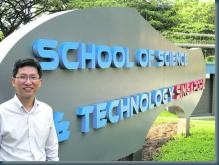
090508-SST1

Mr Chua Chor Huat, principal of the School of Science and Technology. Photo by Lin Yanqin


TOSS out conventional textbooks and design a curriculum from scratch. Assess students on an ongoing basis, rather than the usual exam or test framework.

To keep apace with students who have been brought up to consider online socialising the norm and the Internet their main source of information, these are some of the big steps the School of Science of Technology (SST) in Clementi - which opens next year - plans to take.

And such steps are key to providing an applied-based curriculum where students will learn across disciplines, such as learning about mathematics and geography by looking at the issue of carbon footprints and the environment, said principal Chua Chor Huat.

The school is also prepared to embrace what Mr Chua describes as a “new generation of learners”.

For one, students these days are not averse to approaching authority figures via Facebook and adding them as friends, as one prospective student apparently did with Mr Chua, through SST’s Facebook site.

“He said that he would really love to come to (the) school,” said Mr Chua.

“We’re really dealing with a very new generation of learners ... I could not imagine a student in Primary 6 going up to a principal that you don’t know and say this face-to-face, but technology allows that to happen ... and I think we ought to encourage that.”

Teachers would then become key facilitators in helping their students make use of all the information available, rather than simply passing on knowledge.

And since they joined the school, SST’s teachers have also been hard at work designing and creating their own learning materials from scratch.

“We’re trying to teach real world problems and interdisciplinary learning, and where are you going to find textbooks with physics and chemistry and math all put in?” said Mr Chua.

For example, a Chinese lesson to teach new characters will be accompanied by a video found on YouTube showing the development of Chinese characters through history and punctuated by pop tests where students can enter their answers on laptops instantly.

The school is also putting in place an assessment framework that is “ongoing”, rather than the traditional semestral exams and tests each year.
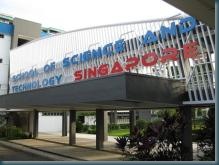
090508-SST2 “We want methods that demonstrate learning,” said Mr Chua. This can be through project work, assignments, blogs and podcasts.


The School of Science and Technology's interim campus at Clementi. Photo by Lin Yanqin


To ensure its pedagogy is sound, SST has inked a tie-up with the National Institute of Education.

And as one of six FutureSchools - schools pioneering innovative teaching methods based on information and communication technology (ICT) - SST will be exploring such methods, which will be shared with other schools if successful.

Such an approach has appeared to attract parents so far - the school has received 150 applications since the Direct School Admissions exercise kicked off in mid-April for its 200 places.

Mr Alvin Sng is one parent who likes what he has heard about the school. “I think its applied-learning approach suits my son’s way of learning and it will stretch him further,” said Mr Sng, 44, who works in business development.
090508-SST3

The School of Science and Technology's interim campus at Clementi. It will move it its permanent campus in 2012. Photo by Lin Yanqin


But there are also those who are concerned as to whether the school’s unconventional curriculum will adequately prepare its students for the O-Level exams waiting for them at the end of four years.

Acknowledging that pen-and-paper tests and exams will still have their place, Mr Chua said the aim of applied learning is to have a deeper understanding of the subjects which will then enable students to do well, if not better, in conventional tests.

He is not ruling out the possibility that the school could eventually develop a six-year programme and bypass taking the O-levels altogether.

After all, a six-year programme - such as the Integrated Programme - has the advantage of being able to deliver the school’s teaching philosophy consistently.

“We want to prove that this is a successful model, and once people see the results, I think that’s when we can look at the next phase of development,” Mr Chua said.

Find out more about SST’s Parent Seminars and its Open House on May 23 at www.sst.edu.sg.

From TODAY, Home – Friday, 08-May-2009


Reblog this post [with Zemanta]

A new approach to learning

New institution has a fresh take on teaching style and examinations

by Lin Yan Qin

04:02 PM May 08, 2009

090508-SST1

Mr Chua Chor Huat, principal of the School of Science and Technology. Photo by Lin Yanqin


TOSS out conventional textbooks and design a curriculum from scratch. Assess students on an ongoing basis, rather than the usual exam or test framework.

To keep apace with students who have been brought up to consider online socialising the norm and the Internet their main source of information, these are some of the big steps the School of Science of Technology (SST) in Clementi - which opens next year - plans to take.

And such steps are key to providing an applied-based curriculum where students will learn across disciplines, such as learning about mathematics and geography by looking at the issue of carbon footprints and the environment, said principal Chua Chor Huat.

The school is also prepared to embrace what Mr Chua describes as a “new generation of learners”.

For one, students these days are not averse to approaching authority figures via Facebook and adding them as friends, as one prospective student apparently did with Mr Chua, through SST’s Facebook site.

“He said that he would really love to come to (the) school,” said Mr Chua.

“We’re really dealing with a very new generation of learners ... I could not imagine a student in Primary 6 going up to a principal that you don’t know and say this face-to-face, but technology allows that to happen ... and I think we ought to encourage that.”

Teachers would then become key facilitators in helping their students make use of all the information available, rather than simply passing on knowledge.

And since they joined the school, SST’s teachers have also been hard at work designing and creating their own learning materials from scratch.

“We’re trying to teach real world problems and interdisciplinary learning, and where are you going to find textbooks with physics and chemistry and math all put in?” said Mr Chua.

For example, a Chinese lesson to teach new characters will be accompanied by a video found on YouTube showing the development of Chinese characters through history and punctuated by pop tests where students can enter their answers on laptops instantly.

The school is also putting in place an assessment framework that is “ongoing”, rather than the traditional semestral exams and tests each year.

090508-SST2 “We want methods that demonstrate learning,” said Mr Chua. This can be through project work, assignments, blogs and podcasts.


The School of Science and Technology's interim campus at Clementi. Photo by Lin Yanqin


To ensure its pedagogy is sound, SST has inked a tie-up with the National Institute of Education.

And as one of six FutureSchools - schools pioneering innovative teaching methods based on information and communication technology (ICT) - SST will be exploring such methods, which will be shared with other schools if successful.

Such an approach has appeared to attract parents so far - the school has received 150 applications since the Direct School Admissions exercise kicked off in mid-April for its 200 places.

Mr Alvin Sng is one parent who likes what he has heard about the school. “I think its applied-learning approach suits my son’s way of learning and it will stretch him further,” said Mr Sng, 44, who works in business development.
090508-SST3

The School of Science and Technology's interim campus at Clementi. It will move it its permanent campus in 2012. Photo by Lin Yanqin


But there are also those who are concerned as to whether the school’s unconventional curriculum will adequately prepare its students for the O-Level exams waiting for them at the end of four years.

Acknowledging that pen-and-paper tests and exams will still have their place, Mr Chua said the aim of applied learning is to have a deeper understanding of the subjects which will then enable students to do well, if not better, in conventional tests.

He is not ruling out the possibility that the school could eventually develop a six-year programme and bypass taking the O-levels altogether.

After all, a six-year programme - such as the Integrated Programme - has the advantage of being able to deliver the school’s teaching philosophy consistently.

“We want to prove that this is a successful model, and once people see the results, I think that’s when we can look at the next phase of development,” Mr Chua said.

Find out more about SST’s Parent Seminars and its Open House on May 23 at www.sst.edu.sg.

From TODAY, Home – Friday, 08-May-2009


Reblog this post [with Zemanta]

Saturday, April 18, 2009

Exams aren’t everything

PRIMARY EDUCATION

Govt accepts recommendations to gradually introduce other forms of assessment

Lin Yanqin, yanqin@mediacorp.com.sg


090415-PrimaryEducationExam 

Education Minister Ng Eng Hen observing a class at Greenridge Primary. Ernest Chua


IT HAS been a proposal some parents have welcomed, and others worried about.

Having alternative modes of assessments in Primary 1 and 2 to the traditional twice-a-year examinations were among recommended changes to primary school education the Government accepted yesterday.

But it will not be a dramatic change overnight, said Education Minister Ng Eng Hen.

As the work of the committee reviewing primary education now enters into the implementation stage, Dr Ng signalled that it would be a long-term work in progress.

The timeframe, he told reporters during a visit to Greenridge Primary, is more of a “10-year plan”, as the Ministry of Education (MOE) starts to build more schools and train more teachers, while schools prepare to introduce bite-sized forms of holistic assessment. “As in most educational ventures, you have to train thousands of teachers, you have to make sure parents understand, you have to teach down to the very last child in the primary schools,” said Dr Ng.

He revealed that the ministry will spend about $4.8 billion to implement the recommendations, which include schools going single session by 2016 and introducing a Programme for Active Learning in areas such as sports and the arts.

The MOE also aims to lower the pupil-teacher ratio from the current 21:1 to 16:1 by 2015, build 18 new schools and upgrade 80 existing schools.

In the case of Greenridge Primary, although it introduced topical assessments — which test individual components such as reading skills — four years ago, these form only part of the pupils’ grades, as the school has continued with traditional exams.

This year, it will do away with mid-year exams, but may retain the year-end one.

“Parents still want some form of assessment to know that their child is ready for Primary 2,” said vice-principal Liza Rahmat. “We have to do this gradually.”

But the new system has notably taken the stress off pupils, she noted, as each assessment focuses on one area rather than the entire syllabus.

“Also, assessments are done in a classroom environment, such as through Show and Tell, so it’s not stressful like a traditional sit-down test or exam,” said Ms Liza.

That is not the only drawback of relying on exams at such a young age.

Dr Ng said: “If you give a mark, say 60. What does that mean? It doesn’t give feedback. The proper feedback to the pupil or to the parent is to say what (the pupil) was weak in and what (the pupil) was strong in.”

Parents at Greenridge yesterday were happy with the results so far.

Mdm Wendy Low, 32, said that compared with her older child who went through the previous exam-oriented system from the start, her younger child was better able to absorb what he was taught.

“He’s more confident because everything is broken into small components and he understands each topic better,” said Mdm Low.

From TODAY, News – Wednesday, 15-April-2009

Exams aren’t everything

PRIMARY EDUCATION

Govt accepts recommendations to gradually introduce other forms of assessment

Lin Yanqin, yanqin@mediacorp.com.sg


090415-PrimaryEducationExam 

Education Minister Ng Eng Hen observing a class at Greenridge Primary. Ernest Chua


IT HAS been a proposal some parents have welcomed, and others worried about.

Having alternative modes of assessments in Primary 1 and 2 to the traditional twice-a-year examinations were among recommended changes to primary school education the Government accepted yesterday.

But it will not be a dramatic change overnight, said Education Minister Ng Eng Hen.

As the work of the committee reviewing primary education now enters into the implementation stage, Dr Ng signalled that it would be a long-term work in progress.

The timeframe, he told reporters during a visit to Greenridge Primary, is more of a “10-year plan”, as the Ministry of Education (MOE) starts to build more schools and train more teachers, while schools prepare to introduce bite-sized forms of holistic assessment. “As in most educational ventures, you have to train thousands of teachers, you have to make sure parents understand, you have to teach down to the very last child in the primary schools,” said Dr Ng.

He revealed that the ministry will spend about $4.8 billion to implement the recommendations, which include schools going single session by 2016 and introducing a Programme for Active Learning in areas such as sports and the arts.

The MOE also aims to lower the pupil-teacher ratio from the current 21:1 to 16:1 by 2015, build 18 new schools and upgrade 80 existing schools.

In the case of Greenridge Primary, although it introduced topical assessments — which test individual components such as reading skills — four years ago, these form only part of the pupils’ grades, as the school has continued with traditional exams.

This year, it will do away with mid-year exams, but may retain the year-end one.

“Parents still want some form of assessment to know that their child is ready for Primary 2,” said vice-principal Liza Rahmat. “We have to do this gradually.”

But the new system has notably taken the stress off pupils, she noted, as each assessment focuses on one area rather than the entire syllabus.

“Also, assessments are done in a classroom environment, such as through Show and Tell, so it’s not stressful like a traditional sit-down test or exam,” said Ms Liza.

That is not the only drawback of relying on exams at such a young age.

Dr Ng said: “If you give a mark, say 60. What does that mean? It doesn’t give feedback. The proper feedback to the pupil or to the parent is to say what (the pupil) was weak in and what (the pupil) was strong in.”

Parents at Greenridge yesterday were happy with the results so far.

Mdm Wendy Low, 32, said that compared with her older child who went through the previous exam-oriented system from the start, her younger child was better able to absorb what he was taught.

“He’s more confident because everything is broken into small components and he understands each topic better,” said Mdm Low.

From TODAY, News – Wednesday, 15-April-2009